Three Centuries, One Night
A Cossack church survived the Bolsheviks. It survived the Nazis. It survived three years of war on the front line. A Russian drone took four seconds.
AUG 05, 2026
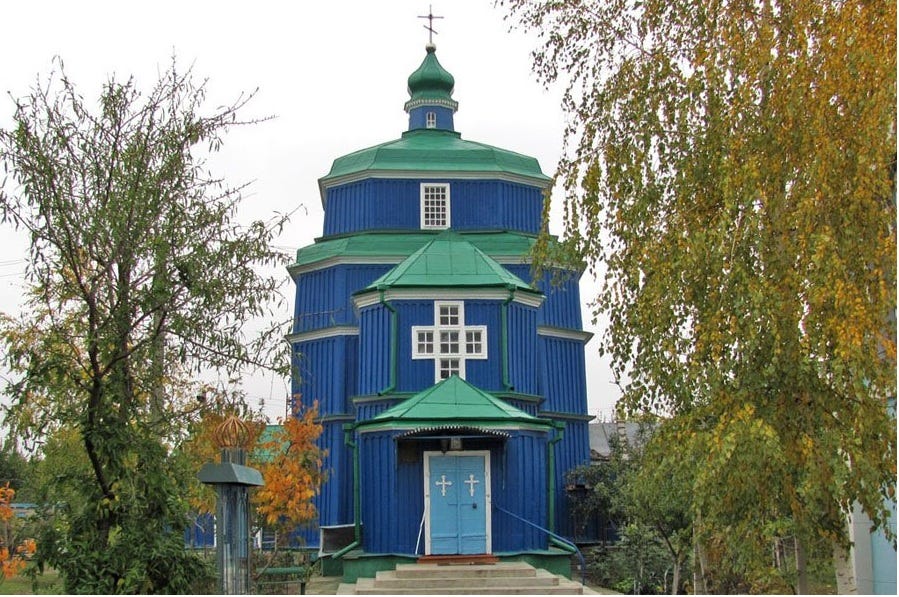
Holy Presentation Church, Beryslav, before its destruction. Photo: Oleh Marchuk / MOST
No metal ever held this building together. Not one nail. The Cossacks who built it in 1725 joined oak beam to oak beam with wooden pegs alone, the way you would build a boat, not a church. That turned out to be fitting. Before this church ever stood still, it sailed.
It began as a military chapel inside the Perevolochna fortress, on the edge of the Zaporozhian Sich, in what is now Dnipropetrovsk Oblast. It was built for Cossacks, by Cossacks, out of oak. It was called the Resurrection Church.
Consider where that fortress sat. This was the border. Beyond it lay the Crimean Khanate, and the Khanate had already built its own fortress downriver, Kyzykermen, specifically to block Cossack boats from reaching the Black Sea. Two fortresses, two peoples, one river between them. This church was raised inside that standoff.
In 1784, the standoff was long over, and the Cossacks who had once manned Perevolochna were resettled south, to the very ground the Khanate’s fortress had occupied. They did not leave their church behind. They took it apart, plank by plank, peg by peg, and floated it more than three hundred kilometres down the Dnipro on rafts. They rebuilt it at Kyzykermen, on the site that would become the town of Beryslav. A church that started life as a border outpost’s chapel ended up standing on the ruins of the fortress that had once tried to keep Cossacks out of that same river.
It survived that move. It survived far more after.
In 1853, during the Crimean War, the town moved the church again, out to the Vvedenske cemetery on Beryslav’s edge, and rededicated it to the Entry of the Most Holy Theotokos into the Temple. Locals simply called it the Vvedenska church, or, more often, the wooden church. Inside it, the parish kept a Gospel printed in 1695, a book thirty years older than the building itself.
Then came the Bolsheviks. They closed the church in 1939 and turned it into a storage depot. There was a serious plan to tear it apart for firewood. A three-hundred-year-old hand-pegged oak structure, built by Cossacks, nearly ended its life heating someone’s stove. It did not. Nobody now can say exactly why the plan was dropped. The church survived Soviet power by margin, not by protection.
Then came the Germans. Under occupation, services resumed inside the church, and in 1942 German soldiers built a military cemetery around it. A Ukrainian Cossack chapel, standing through a Nazi occupation, hosting Orthodox services while foreign soldiers were buried at its walls. History rarely offers a detail that strange. This one is documented. The priest who reopened it, Father Danyil, went on serving there into the 1960s.
It survived that too.
For decades afterward, it simply stood. Through the rest of the Soviet period, through independence, through the slow accumulation of an ordinary parish’s ordinary life. In 2022, Russia’s full-scale invasion reached Kherson Oblast, and Beryslav fell under occupation. When Ukrainian forces liberated the west bank later that year, Beryslav stayed on the front line, one of the most heavily and continuously shelled towns in the country. Every other landmark around it took damage. The wooden church did not. For three years, it was the one thing in Beryslav the war had not managed to touch.
The war reached the church in other ways first. At the time of its destruction, the parish’s rector was a man named Oleksandr Mykhailenko, who had collaborated with the Russian occupation authorities and fled with their retreating troops. A new rector, Father Mykola Ponych, had since taken his place. Even a building this old was not immune to the smaller betrayals of the war going on around it.
In 2023, the town’s military administration asked Ukraine’s Ministry of Culture to formally transfer the church into state ownership. It was still administered, on paper, by the Moscow Patriarchate’s Ukrainian Orthodox Church, in the Novokakhovka Eparchy headed by a Russian citizen, Metropolitan Filaret. The request went nowhere. Nobody resolved it. The building that had outlasted the Bolsheviks and the Wehrmacht sat for three more years technically under the ecclesiastical authority of the country now trying to destroy it.
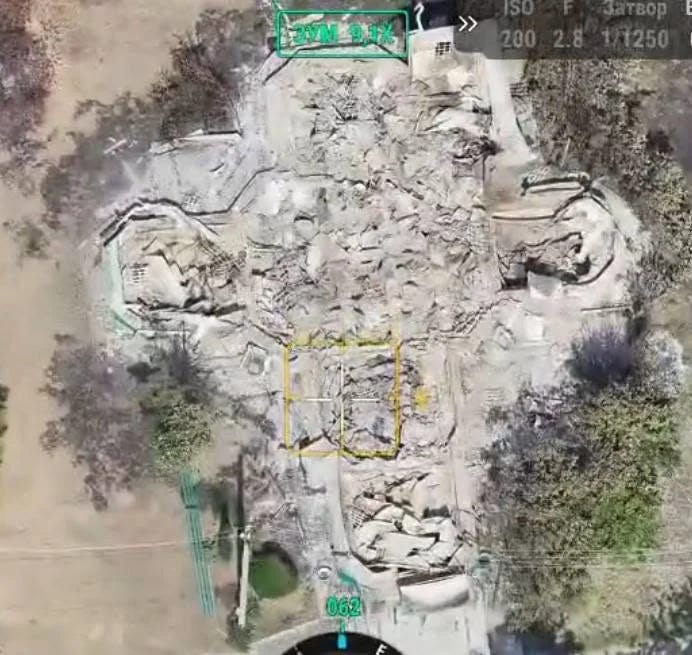
In May 2026, a photograph of the church, taken by Oleh Marchuk, won a special nomination in Ukraine’s Wiki Loves Monuments contest, entered alongside more than five thousand photographs of the country’s wooden architecture. People were still finding it beautiful. People were still pointing cameras at it. Three months later, on the night of 1 to 2 August 2026, a Russian drone struck it, and it burned.
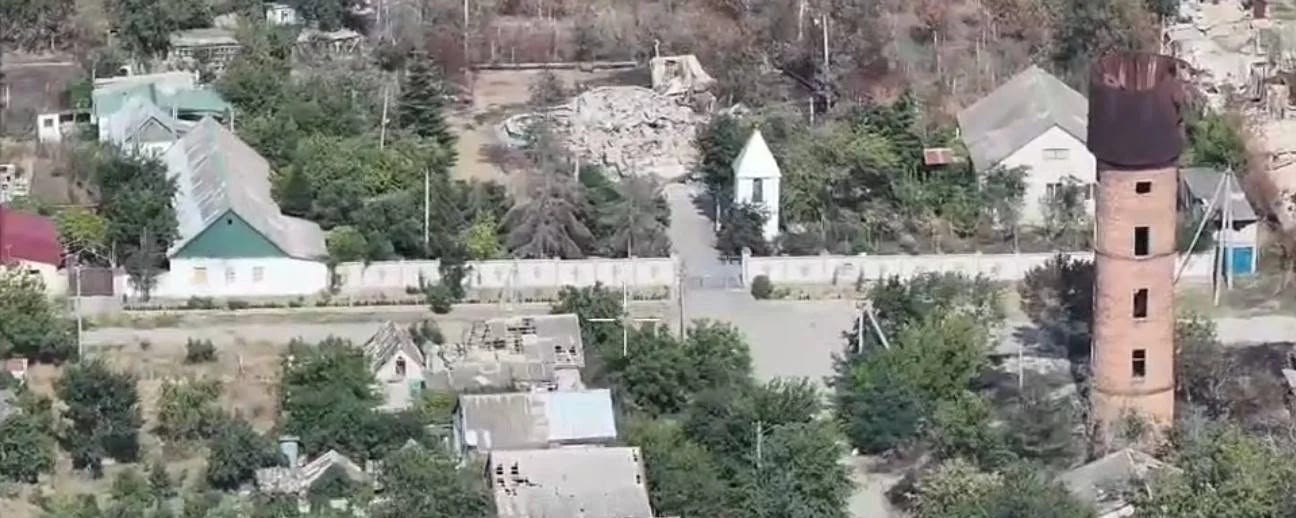
Photo released by the Beryslav City Military Administration, via MOST
Oleksandr Alchiyev, head of the Beryslav City Military Administration, released the photographs himself and put the loss plainly.
Its destruction is a loss that cannot be measured only by the value of the timber or the building. Together with the temple we have lost part of the material memory of the people who lived on this land long before the emergence of modern borders.
Nobody yet knows what happened to the icons inside, or the old wooden altar cross the Cossacks are said to have given the church, or the seventeenth-century Gospel kept in it. As of writing, there is no word on whether anything was saved.
No nail ever held that church together. Fire did not need one either.
This is the second building of its kind we have covered this year. In June, Russia struck the Kyiv Pechersk Lavra, the spiritual heart of Ukrainian Orthodoxy, founded in 1051. In August, it struck a wooden Cossack chapel built on the empire’s old southern border. One was the faith’s grandest monument. The other was its plainest. Between them sits nearly a thousand years of Ukrainian religious life, and Russia has now put a missile or a drone through both ends of it in the same summer.
28 Likes ∙