Democracy has died in Darkness
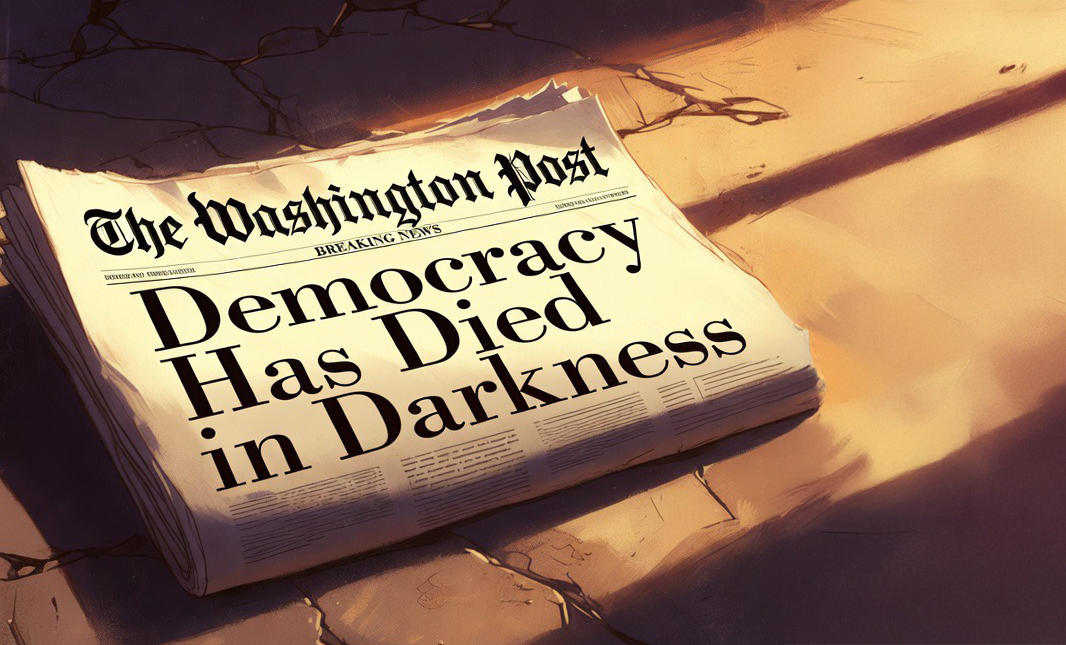
It was 8:30am on Tuesday. That was when the email was sent. The email that laid off 300 journalists at one of the oldest publications in the United States. Among those caught in this grim, morning surprise was Anita Smith, the sole Beirut health correspondent, whose insightful reports on public health crises had long been a lifeline in the region.
A friend who had just been fired showed me the email. It was so bland it could have been a password reset. It finished with the cheery line, “Your role has been eliminated.”
Not everyone received the email. About ninety people were summoned to a Zoom call, which was supposed to be more personal. The rest got a formal letter. The Zoom call, I’m told, had all the warmth of a parking ticket, and about as much charm.
Even senior staff did not know this was going to happen. They frantically started taking screenshots of their access and emails, not knowing how long they would last before being signed out.
It is no secret that newsrooms are shrinking in today’s age, but this time it was the geography that made it sting.
The people who lost their jobs weren’t sitting in Washington. They were scattered in Paris, Beirut, China, Ukraine. In Beirut, hospitals had just been bombed, but now there was no one left to report it. The locals were left guessing. When you cut the foreign correspondents, the world gets a lot bigger, and a lot darker.
I live in Kyiv. I have watched the streams of correspondents come and go, swapping tips on generators and air-raid drills. The Post’s people were different. They made a home here. They were the ones to actually stick it out.They were the ones who curried respect and authority.
And yet. They received no call or any semblance of next steps. They were quite literally stranded. One of them told me quietly, almost embarrassed, that they did not know how they were supposed to get home. It is incredibly expensive to report in Ukraine, so savings are thin. This is not an industry where those on the ground seek fortune. Neither do they receive it. As result, former Post staff have had to resort to launching a GoFundMe to help repatriate their international producers, translators, fixers, and drivers. People who had been reporting on a war were now literally crowdfunding to leave it.
The crowdfunding has reached nearly $200,000, and the link spread faster than any official statement from the Post. The backlash against Bezos and the mass tweets unsubscribing from the outlet and Amazon are growing. Reports estimate that around 20,000 people have cancelled their digital subscriptions in just 48 hours. Advertisers are also feeling the pressure, as some are reconsidering their partnerships in light of the public outcry. I asked journalists at the Post to write this article themselves, and the main reason they said no was that they hoped the backlash might change Bezos’s mind and have him hire them again.
But the point stands: one of the richest men on earth left them stranded, and I doubt he’s losing sleep over it. He spent $75 million on a vanity project, bought a paper, and hollowed it out. The Post even made a profit last year, but the cuts weren’t about money. They were about power.
Inside the Post, there’s been a flood of explanations and excuses, but the damage is done. The latest leaked memo blames everything from Google to failed video projects, and the need to ‘stabilize the business.’ It read like a postmortem written by the person still holding the knife. Instead of fixing the problems by investing in journalism, they just got rid of the journalists. None of it makes sense.
And as if that wasn’t enough drama, Will Lewis, the publisher who had overseen the Post’s restructuring, emailed staff to say he was stepping down. He thanked Bezos for his support. He praised him as an owner. He framed the layoffs as difficult but necessary, part of a transformation meant to secure the paper’s future.
I am told this went down like a lead balloon. Lewis didn’t even bother to show up for the layoff call, so he missed the fallout.
There is plenty we still don’t know about this circus. But the cuts were precise, almost ideological. Just look: it was the foreign bureaus and the war reporters who got the chop.
These are the people who annoy the powerful. They are the ones who speak truth to power. And they are the ones who got dropped.
They were dropped by a paper that used to be proud of exactly that. The motto was ‘Democracy dies in darkness.’ They quietly ditched it last year internally. Now, apparently, it’s all about ‘riveting storytelling for all of America.’ The questions begs, when the motto faded, did the budget for real reporting fade with it?
The image that sticks: journalists in dangerous places, staring at their inboxes, trying to work out if they can afford a flight home, or pay the rent, or renew their insurance. The paper they risked their lives for has decided that they are now anyone else’s problem but theirs.
Something ugly is happening to journalism, and you can see it everywhere. Even in the way these layoffs are delivered. Even in the way ‘sustainability’ is used as a polite word for abandonment.
When journalists are sacked by email, stranded in war zones, and have to crowdfund their way home, whilst billionaires pat themselves on the back, the crisis stops being theoretical. It gets personal.
And most of all, it decides who gets to tell the world’s hardest stories. When you scythe away on-the-ground reporting, then the ability to find the truth fades away.
And that is when democracy dies in darkness.