Kherson is still under brutal attack and it’s getting worse
In Kherson, Iryna Babenko, 49, embroiders poetry. Her son, 15, studies math and language online. It might seem peaceful if not for explosions outside every few minutes.
“I am used to this,” says Iryna, her silver-gray hair like a halo around her face. “But my kid is afraid to step outside. He got under artillery shelling last month, and now he won’t go outside, even for a walk. ‘You just never know where it would land,’ he says.”
The boy has a point. His older brother was injured by a drone on the way to a post office. His brother’s wife lost several teeth after falling while running from a drone.

This family’s story reflects the tragedy of Kherson. In February 2022, they were separated by the war and the river during the occupation. Iryna’s older son, husband, and mother stayed on the left bank; she was on the right bank with her two younger sons. After the liberation in November 2022, they reunited in Kherson, but not for long. Her husband volunteered for the army. Six months ago, at the frontline, he was killed by a Russian drone.
Money is scarce. Going to the grocery store is risky. The power goes on and off. Yet Iryna and her family do not want to leave.
“I was born here, my husband was born here. This is our home,” she says.
Kherson faces a deep humanitarian and infrastructure crisis. Civilians live without stable heat, electricity, water, or communication under a particularly horrifying new strategy: “human safari.”
In July 2024, Byline Times first reported on a new form of warfare and a new category of war crimes: small commercial drones used to hunt civilians. The locals call it the “human safari.”
First Person View (FPV) drones drop explosives and return to their operators across the Dnipro river, to the occupied territories. They carry cameras allowing a remote operator to guide them directly to a target and one to two kilograms of explosives, often packed with shrapnel. Cheaper drones, known as kamikaze drones, detonate on impact.
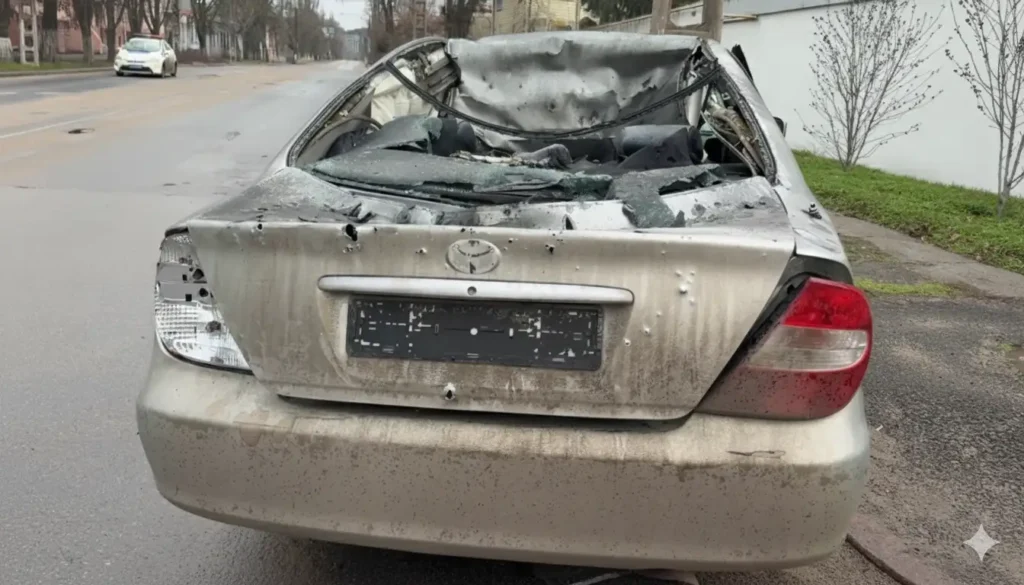
Drones also drop anti-personnel mines, hazardous objects, and incendiary mixtures on residential areas. Drones chase pedestrians, strike vehicles, and fly into homes. They target civilians of all ages, as well as taxis and public transport. They target first responders in “double tap” strikes, where a second drone hits rescue teams arriving after an initial attack. They hit hospitals, schools, and grocery stores.
Russian Telegram channels regularly publish drone footage of attacks, sometimes set to music, turning the killings into stylized content meant to dehumanize Ukrainians.
Small drones have been used in military operations for more than a decade. In Ukraine, their role has expanded in frontline regions, including Kherson, Sumy, Kharkiv, and the city of Nikopol, to the point that the war is called “a war of drones.” Drones are used not only for combat, but for psychological terror and forced depopulation.
In the Kherson region, Russian drone attacks killed 76 civilians in 2024 and injured 796 adults and 11 children, according to the Kherson Regional Military Administration. In 2025, a “human safari” killed 130 people, including three children. Another 1,195 people, including 17 children, were injured. In 2025, the occupiers used 97,000 strike drones to attack the Kherson region.
Under international humanitarian law, “human safari” constitutes a war crime and a crime against humanity. Intentional attacks against civilians or civilian objects are prohibited by the Geneva Conventions and the Rome Statute of the International Criminal Court. But the question is: why drones?
Its simple, small drones are cheaper and easier to deploy than artillery or missiles. In the Kherson region, Russian artillery is positioned on the lower left bank of the Dnipro River, while Ukrainian forces hold the higher right bank. That geography limits artillery effectiveness.
United Nations and Human Rights Watch reports describe the tactic as part of a broader hybrid warfare strategy combining physical attacks with psychological and information operations aimed at forced displacement.
Ukrainian sources claim Russia has expanded pilot training. A drone school in Rostov-on-Don trains operators who are then sent to regions such as Kherson and Zaporizhzhia for practice runs on civilians. This raises an important next point, what is the defence to this?
Defending against small drones is a challenge. Smaller models are hard to detect. Electronic warfare systems attempt to jam drone frequencies, but operators switch frequencies to evade interference. Russian forces have introduced fiber-optic drones, controlled through cables rather than radio signals. These cannot be disrupted by standard electronic warfare systems.
The city has built a unique three-layer defense system, a radio-electronic “wall” operating simultaneously across fifteen frequencies. It helps neutralize various types of drones.
Mobile air defense units shoot down the drones, and some civilians have resorted to using hunting rifles to shoot down drones at close range. Automatic weapons shake the streets of Kherson several times an hour.
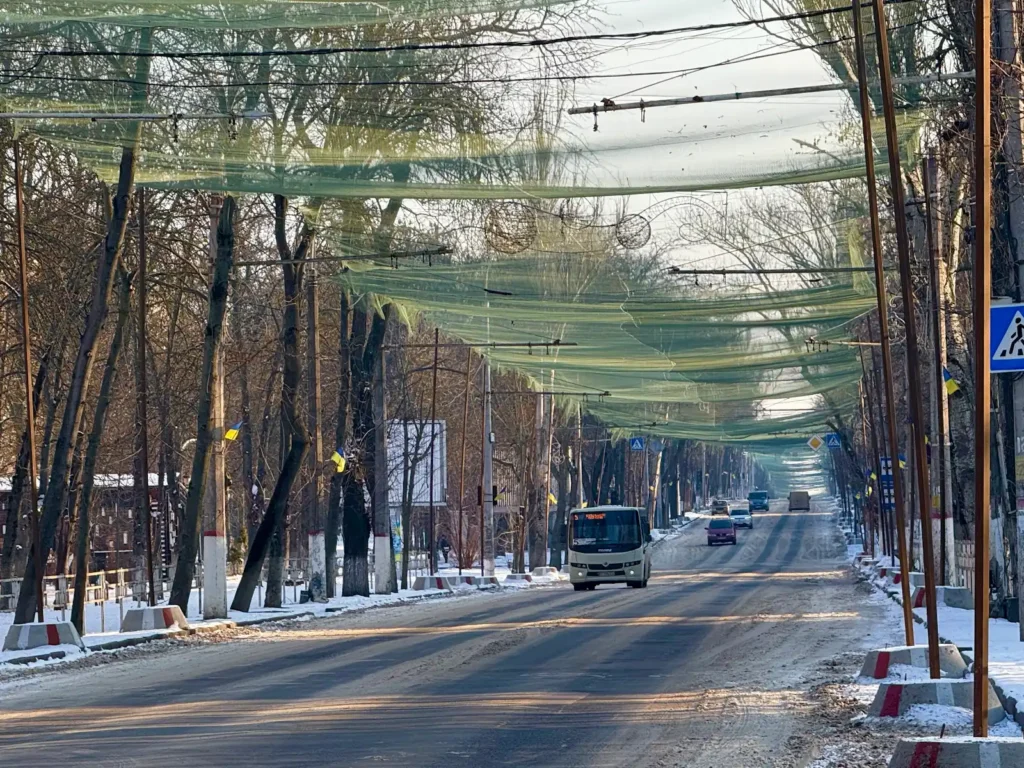
Yet, most residents have little protection. Civilian vehicles lack the jamming equipment installed on military vehicles. To save lives, the city installs anti-drone tunnels made of fishing nets along roads. it sounds surreal but it’s true. There’s a final point to this though and thats the legal implications.
The world still hears little of the “human safari” in a European city in 2026. The scale and pattern of human safari attacks indicate a coordinated strategy. On 27 October 2025, the Independent International Commission of Inquiry on Ukraine published an investigation determining the responsibility by identifying drone operators and units on the left bank. These units belong to the Dnepr Group of Forces under Colonel General Mikhail Teplinsky, reporting to the Russian President, Vladimir Putin. The Commission called for criminal investigations and prosecutions of all those who ordered, enabled, or carried out these drone attacks on civilians.
As the technology becomes cheaper and more accessible, the use of small drones in offensive operations will grow. Existing international law needs to be updated to address the rapid expansion of drone warfare and to hold perpetrators accountable.