Billionaires Bought and Broke The Press
In 2016, a Florida courtroom became the scene of something much larger than a privacy dispute. Hulk Hogan sued Gawker for publishing a clip from a leaked sex tape. On paper, it was a grubby case. On paper, it was also odd. Hogan was not rich. At all. Gawker wasn’t either. And yet, the legal fight that followed was brutal, meticulous and, most of all, ruinously expensive. Thats the kind of legal campaign that doesn’t happen unless someone, somewhere, is footing the bill.
Someone was.
It later turned out that Peter Thiel had secretly bankrolled the case. That’s because this wasn’t about a sex tape. It was about revenge. Gawker had embarrassed Thiel years earlier by reporting on his private life. Thiel waited. Then he paid, and Gawker collapsed. Hundreds of journalists lost their jobs. An entire media company vanished overnight.
It shook the industry and sent a clear message: you just need enough money and patience to collapse entire papers. People got cautions. And they got scared.
Since then, the press has been quietly changing hands. Not always dramatically…sometimes politely. Sometimes with a press release about “long-term sustainability” and “strategic vision.”
In Britain, the London Evening Standard was bought in 2009 by Alexander Lebedev, a former KGB officer turned oligarch. London’s free daily newspaper survived, technically. But something else happened. The newsroom thinned. The paper lost its edge. It stopped mattering in the way it once had. The title remained but the institution did not. I remember hearing this first-hand from a former journalist.
They described in detail how Lebedev would sit with his feet up on his desk and flick through stories about Russia, sometimes twenty in a day. He would read them and decide which ones would run and which ones wouldn’t. At that point, the paper might still exist but the institution doesn’t.
Later came The Spectator, founded in 1828, old enough to feel indestructible. It wasn’t. In 2024, it was sold to a billionaire hedge-fund backer with strong political interests and very little interest in pretending otherwise. Staff resigned. Readers shrugged. The sale went through anyway. Tradition, it turned out, doesn’t count for much when the numbers work.
Across the Atlantic, Jeff Bezos bought The Washington Post in 2013, promising independence, ambition, and respect for journalism. For a while, people believed him. Then the cuts started. Foreign bureaus quietly reduced. War reporting deprioritised. Correspondents were sidelined. Not because the Post was failing but because it no longer aligned neatly with the priorities of it’s billion-dollar owner.
This is how it works now. Nobody storms the newsroom. Nobody censors a headline.
CNN followed a similar arc. Ownership changed in shady backroom deals. Global posture softened. A major presence opened in Doha. Coverage of Qatar grew noticeably gentler, even as the country’s role in regional politics, energy diplomacy, and extremist financing drew scrutiny elsewhere. Because that’s how media is bought.
It gets worse, especially at a micro level, hedge funds are buying up local papers across the United States, gutting newsrooms, stripping assets, leaving behind mastheads and nothing else. Communities wake up to find their paper still exists, technically, but nobody is left to report on city hall, corruption, or crime. The lights are on and nobody’s one’s home.
To top it all off, Elon’s purchase of Twitter turned a public square into a personal experiment. Moderation evaporated. Extremists flourished. Twitter didn’t stop being influential. It just stopped being stable. A single billionaire’s mood swings now ripple across global news cycles in real time and decide the chaos we read. It works too, scroll for longer than a few seconds and you can feel your brain starting to rot.
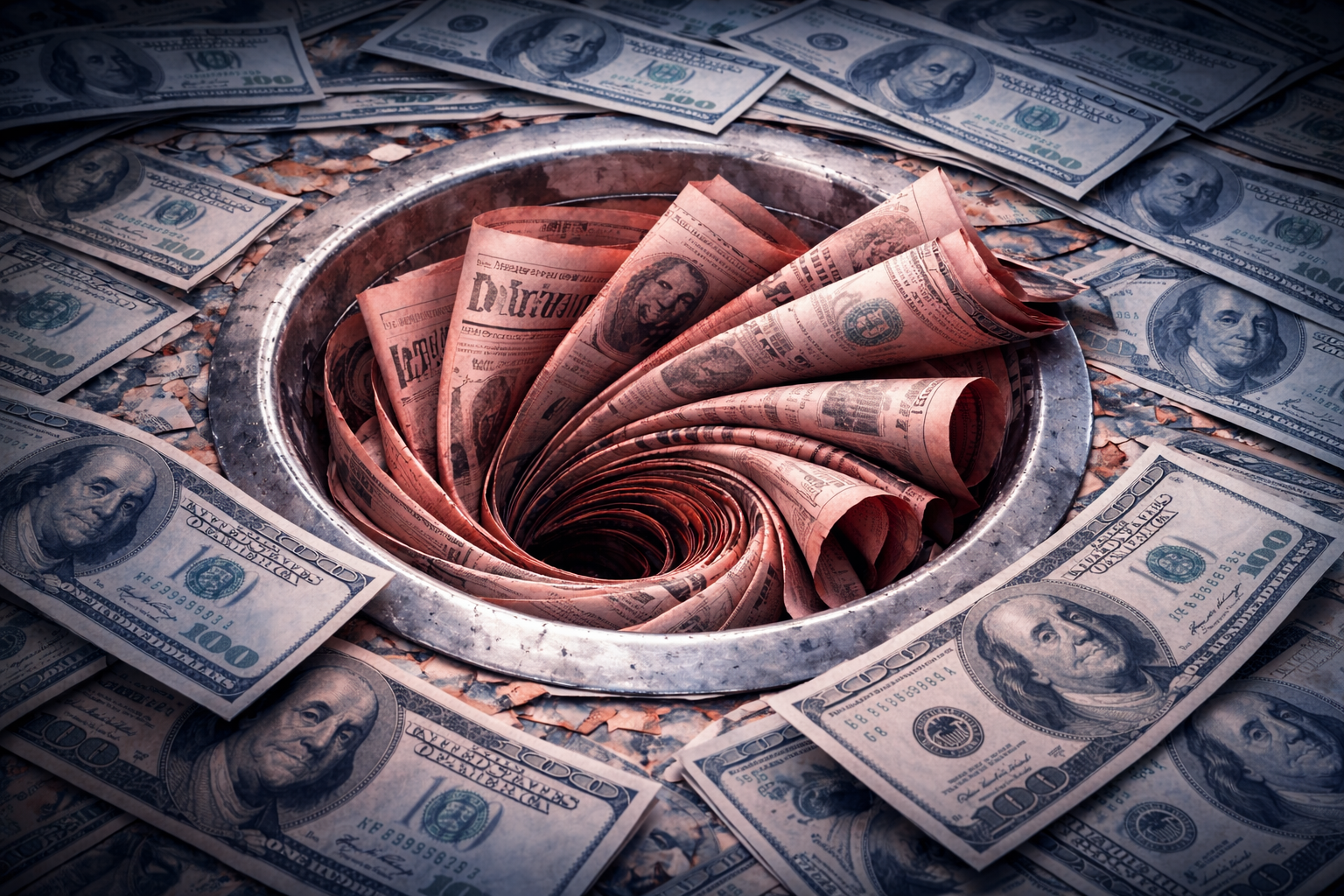
This is happening because advertising revenue fled journalism years ago, flowing instead to platforms that produce no reporting at all. Newsrooms became thinner, more anxious, and more dependent. Into that weakness entered people who could afford to lose money indefinitely. Billionaires don’t buy media to make a return. They buy it to shape the world we live in.
The result, in 2026, is a press that looks intact from a distance but feels hollow up-close. Foreign coverage dries up. Investigations take longer or never happen. Editors learn which fights are worth picking. Journalists learn which topics quietly stall careers.
The Washington Post story isn’t shocking. It’s predictable. So is the Telegraph sale saga. So is the Spectator. So was Gawker. The surprise isn’t that billionaires interfered. It’s how little resistance there was once they did.
I’ve spent the last three years reporting from Ukraine, where the consequences of weak journalism are easy to see. Before that, I worked on investigations into disinformation and foreign interference in British politics for Byline Times – one of the last bastions of true and independent journalism. But places like Byline are under attack more than ever, and that means when journalism retreats, power moves faster and cleaner.
That’s why I started Caolan.Reports.
Not because I think independent journalism is romantic. It isn’t. It’s exhausting. It’s unstable. It fails all the time. But it’s still better than a press that exists at the pleasure of men wealthy enough to never be contradicted.
There’s no foreign investment here. No government funding. No advertisers. No benefactors with interests to manage. The site literally survives if you decide it’s worth reading. If it isn’t, it dies. That’s the trade.
At least it’s an honest one